Category: Marketing Digital

  • Diseño Web y SEO: Aliados para el Éxito

    Diseño Web y SEO: Aliados para el Éxito

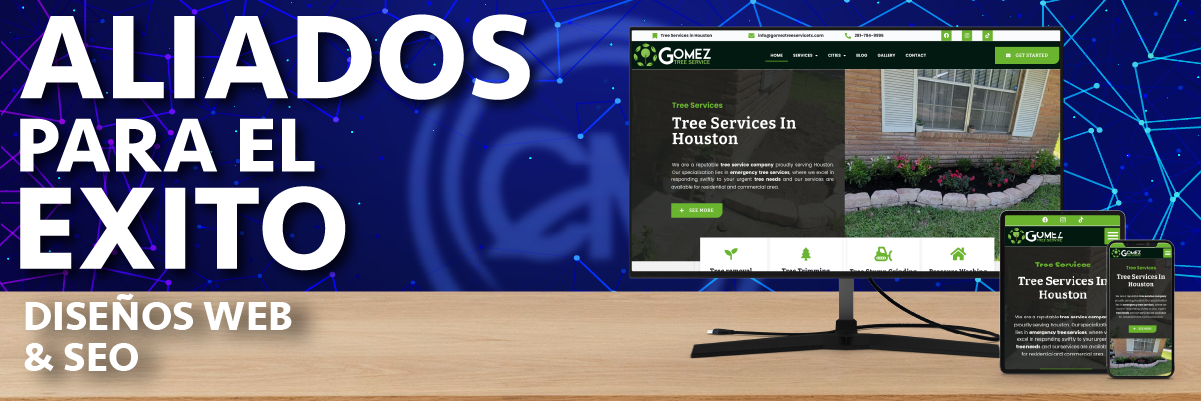
    Cuando se trata de crear un sitio web exitoso, el diseño y el SEO (Optimización de Motores de Búsqueda) son dos elementos fundamentales que deben trabajar juntos en armonía. En este artículo, exploraremos cómo estas dos disciplinas se complementan mutuamente y cómo puedes aprovechar su sinergia para impulsar el rendimiento de tu sitio web.

    Diseño Web Amigable para SEO

    Estructura y Navegación

    Un diseño web bien estructurado no solo es atractivo visualmente, sino que también facilita la navegación del usuario y la indexación por parte de los motores de búsqueda. Asegúrate de tener una jerarquía de contenido clara y una navegación intuitiva para que los visitantes y los motores de búsqueda puedan encontrar fácilmente lo que buscan.

    Velocidad de Carga

    La velocidad de carga de tu sitio web es un factor crítico para el SEO. Un diseño optimizado con imágenes comprimidas, archivos CSS y JavaScript minimizados, y una buena elección de hosting puede mejorar significativamente la velocidad de carga, lo que a su vez beneficia tu clasificación en los motores de búsqueda y la experiencia del usuario

    Responsividad

    El diseño responsivo, que adapta tu sitio web a diferentes dispositivos y tamaños de pantalla, es una prioridad para Google. Asegúrate de que tu diseño sea mobile-friendly para cumplir con los estándares de SEO y para brindar una experiencia de usuario óptima en dispositivos móviles. Es una prioridad estratégica para Google y otros motores de búsqueda

    Desarrolla una página web altamente optimizada para los motores de búsqueda.

    SEO y Diseño de Contenido

    Palabras Clave

    El diseño de tu sitio web debe acomodar de manera efectiva las palabras clave relevantes para tu industria. Esto incluye la optimización de títulos, encabezados y contenido en general para que esté alineado con las consultas de búsqueda de tus usuarios..
    image optimization

    Optimización de Imágenes

    Las imágenes son parte integral de muchos sitios web, y optimizarlas para SEO es esencial. Asegúrate de utilizar etiquetas alt descriptivas y nombres de archivo relevantes para que las imágenes sean indexadas y aparezcan en los resultados de búsqueda de imágenes.
    enlaces

    Enlaces Internos y Estructura de URL

    El diseño de tu sitio debe facilitar la creación de enlaces internos coherentes y una estructura de URL amigable. Esto ayuda a los motores de búsqueda a comprender la relación entre las páginas de tu sitio y mejora la experiencia del usuario al permitir una navegación más sencilla.
    ui-ux-icon-sign-design-free-png

    El Diseño y la Experiencia del Usuario

    Un diseño web de calidad también se traduce en una mejor experiencia del usuario, lo que puede reducir la tasa de rebote y aumentar la retención de visitantes. Esto, a su vez, puede mejorar tus métricas de SEO, como el tiempo en la página y la tasa de clics.

    El diseño web y el SEO son aliados poderosos para el éxito de tu sitio web. Un diseño bien pensado no solo atrae a los visitantes, sino que también optimiza la visibilidad en los motores de búsqueda. Al unir estos dos aspectos de manera estratégica, puedes lograr un sitio web que no solo se ve bien,sino que también funciona bien y atrae a una audiencia cada vez mayor.

    Impulsa tu éxito digital con nuestro SEO de élite

  • ¿Cómo posicionar mi negocio en internet?

    ¿Cómo posicionar mi negocio en internet?

    Existen muchas empresas tradicionales que aún no utilizan el internet para dar a conocer su empresa o como una herramienta comercial, ya que creen que internet no les funcionara para su negocio y desean seguir trabajando con los referidos o el famoso boca a boca. 

    Esta es buena estrategia si en los planes de tu empresa no está crecer o llegar a más cliente, estando en el siglo XXI empresa que no exista en internet está expuesta a desaparecer. 

    Posicionar tu negocio en Internet requiere de una estrategia digital efectiva. Aquí te presento algunas estrategias y plataformas clave para promocionar y dar a conocer tu negocio: 

    1.  Crear un sitio web: Es fundamental contar con un sitio web profesional que muestre tus servicios, experiencia y contactos. Asegúrate de que sea fácil de navegar, esté optimizado para dispositivos móviles y contenga información relevante y atractiva para tus clientes potenciales. 
    1. Optimización para motores de búsqueda (SEO): El SEO es importante para aumentar la visibilidad de tu sitio web en los resultados de búsqueda. Investiga las palabras clave relevantes para tu negocio, y optimiza tu contenido y etiquetas para que los motores de búsqueda puedan encontrarlo más fácilmente. 
    1. Presencia en redes sociales: Crea perfiles empresariales en plataformas de redes sociales como Facebook, Instagram, Twitter o LinkedIn. Comparte contenido relacionado con tu negocio, consejos, proyectos realizados, testimonios de clientes satisfechos, etc. Interactúa con tu audiencia y responde a sus consultas y comentarios. 
    1. Marketing de contenido: Crea y comparte contenido útil y relevante para tu público objetivo. Puedes escribir blogs, guías de uso o cuidado de tu producto, consejos de tu producto, vídeos tutoriales, entre otros. Esto posicionará tu negocio como una autoridad  y generará confianza entre los usuarios. 
    1. Publicidad en línea: Utiliza plataformas de publicidad en línea como Google Ads o Facebook Ads para llegar a una audiencia más amplia. Puedes configurar anuncios específicos dirigidos a personas interesadas en tu producto o servicio en tu área geográfica. 
    1. Directorios y reseñas en línea: Registra tu negocio en directorios en línea y sitios de reseñas como Google My Business, Yelp o Houzz. Esto aumentará la visibilidad de tu negocio y permitirá a los clientes dejar reseñas y comentarios, lo cual es muy valioso para generar confianza y credibilidad. 
    1. Colaboraciones y alianzas estratégicas: Considera asociarte con otros negocios relacionados, para ofrecer servicios conjuntos o recomendaros mutuamente. Esto puede ayudar a ampliar tu alcance y atraer nuevos clientes. 

    Recuerda adaptar estas estrategias a tu público objetivo y a tu ubicación geográfica. Analiza regularmente los resultados de tus esfuerzos en línea y realiza ajustes en tu estrategia según sea necesario. La consistencia y el compromiso son clave para obtener resultados a largo plazo.

  • Google My Business: una herramienta te permite gestionar tu perfil de empresa

    Google My Business: una herramienta te permite gestionar tu perfil de empresa

    ¿Qué es Google My Business?

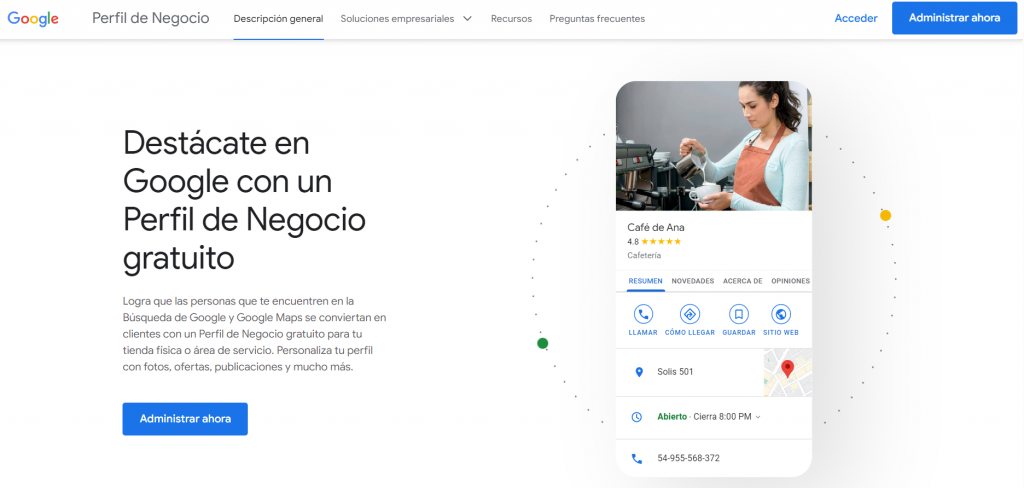
    Es una herramienta gratuita que te permite crear y gestionar un perfil de tu empresa en Google. Con un perfil de empresa, puedes destacar entre la competencia y conectar con los clientes que buscan tus productos o servicios en la Búsqueda de Google y Maps.

    Google My Business

    Además, Google My Business permite a los propietarios de negocios interactuar con sus clientes, responder a comentarios y calificaciones, publicar actualizaciones de la empresa y mucho más. Te ayuda a mejorar tu visibilidad online, atraer más clientes y a fidelizar a los que ya tienes. Según un estudio de Google, el 80% de los consumidores utilizan la Búsqueda y Maps para encontrar información local, y el 70% de ellos confían más en las empresas que tienen información completa en Google. Por lo tanto, si quieres que tu empresa tenga una buena presencia en Internet, no puedes ignorar esta herramienta.

    Pasos para optimizar tu perfil de empresa

    1. Reclama tu perfil de empresa en Google My Business. Vas a necesitar una cuenta de Google y verificar que eres el propietario o el representante autorizado de la empresa.

    2. Personaliza tu perfil con la información esencial que quieras mostrar a los clientes. Agrega el nombre, dirección, teléfono, horario, categoría, sitio web y redes sociales de tu negocio.

    3. Añade fotos y videos que muestren lo mejor de tu empresa, como el escaparate, los productos, los servicios o el equipo. Las imágenes ayudan a captar la atención de los usuarios y transmiten confianza y profesionalidad.

    4. Publica novedades, ofertas, eventos o consejos para mantener a los clientes informados y fidelizados. Puedes crear publicaciones desde la aplicación móvil o desde el ordenador.

    5. Responde a las reseñas que te dejen los clientes y agradece su opinión. Estas son una forma de feedback que mejoran tu reputación online.

    6. Habilita la opción de mensajes directos para comunicarte con los clientes que te contacten desde tu perfil. Así podrás resolver sus dudas, enviarles presupuestos o confirmar citas.

    7. Utiliza las estadísticas para conocer cómo encuentran los clientes a tu empresa, qué palabras clave utilizan para buscarla y qué acciones realizan desde tu perfil. Estos datos te ayudarán a mejorar tu estrategia de marketing digital.

    Ventajas de usar Google My Business

    Google My Business tiene muchas ventajas para las empresas que quieren tener presencia online y llegar a más clientes potenciales. Algunas de estas ventajas son:

    1. Es gratis y fácil de usar. No necesitas tener conocimientos técnicos ni invertir dinero para crear y gestionar tu perfil de empresa.

    2. Te permite aparecer en la Búsqueda de Google y Maps. Cuando los usuarios busquen productos o servicios relacionados con tu negocio o cerca de tu ubicación, podrán encontrarte con mayor facilidad.

    3. Te ayuda a diferenciarte de la competencia. Aprovecha para mostrar lo que hace única a tu empresa, como tus valores, tu historia o tus ofertas especiales.

    4. Te facilita la comunicación con los clientes y la generación de confianza y lealtad. Puedes interactuar con ellos mediante publicaciones, reseñas o mensajes directos.

    5. Te ofrece información valiosa sobre el comportamiento y las preferencias de los clientes que visitan tu perfil. Es tu oportunidad de mejorar usando la información recopilada para adaptar tu oferta y mejorar tus resultados.

    En conclusión, Google My Business es una herramienta imprescindible para cualquier empresa que quiera tener visibilidad online y aumentar sus ventas. Si aún no tienes un perfil de empresa en Google, te animamos a crearlo cuanto antes y a seguir nuestros consejos para optimizarlo. Puedes contactarnos al 863-582-5300 para pedir una asesoría.

  • Marketing Digital en 2023: ¿Cuáles son las tendencias?

    Marketing Digital en 2023: ¿Cuáles son las tendencias?

    El marketing digital es un campo que está en constante evolución para adaptarse a los cambios tecnológicos, sociales y culturales que se producen en el mundo. Cada año surgen nuevas tendencias que marcan la pauta para las estrategias de las empresas que quieren conectar con sus clientes y destacar en el mercado. En este artículo te presentamos algunas de las tendencias más relevantes que se esperan para el año 2023

    Planificar el contenido de forma más inclusiva

    El sector de la publicidad se ha centrado mucho en ofrecer creatividades más inclusivas en los últimos años, pero ahora también se aplica esta iniciativa a la planificación de medios. Se trata de tener en cuenta la diversidad de los públicos y sus necesidades, intereses y preferencias a la hora de elegir los canales, formatos y mensajes adecuados para cada segmento.

    Publicidad comprometida con una causa

    Los consumidores cada vez están más interesados ​​en lo que representa una empresa y sus valores sociales y ambientales. Por eso, las marcas que quieran generar confianza y lealtad deben mostrar su compromiso con una causa que sea relevante para su audiencia y coherente con su identidad.

    Privacidad y tranquilidad

    La protección de los datos personales es una preocupación creciente para los usuarios, especialmente después del fin de las cookies de terceros y la implementación del Reglamento General de Protección de Datos (RGPD) en Europa. Las empresas deben garantizar la transparencia y el consentimiento en el uso de la información que recogen sobre sus clientes, así como ofrecerles opciones para gestionar su privacidad.

    Contenido adaptado para la generación Z

    Los jóvenes nacidos entre 1997 y 2010 son los nuevos protagonistas del mercado, con un poder adquisitivo estimado en 143 mil millones de dólares según Forbes. Esta generación es nativa digital, hiperconectada, socialmente consciente e influyente. Para llegar a ellos hay que entender sus hábitos, gustos y expectativas, así como utilizar los canales donde se encuentran, como TikTok o Instagram.

    Experiencias de realidad aumentada

    La realidad aumentada es una tecnología que permite superponer elementos virtuales sobre el entorno real mediante dispositivos como smartphones o gafas especiales. Esta tecnología ofrece múltiples posibilidades para el marketing digital, como crear experiencias interactivas e inmersivas que mejoren el engagement y la conversión.

    Videos cortos

    Son aquellos que en general duran menos de un minuto. Caracterizados por ser dinámicos, divertidos e informales, este tipo de videos ha ganado mucha popularidad gracias a TikTok e Instagram, donde los usuarios pueden crear y compartir su contenido favorito de forma fácil y rápida. Son una forma muy efectiva de captar la atención.

    Enfoque en el SEO

    Con el final de las cookies de terceros, captar clientes con publicidad de paga no será tan sencillo. Apostar por conseguir más tráfico mediante el SEO puede ser la solución para muchas empresas que buscan nuevos clientes potenciales.

  • What is Digital Marketing?

    What is Digital Marketing?

    Digital marketing, also called online marketing, is the promotion of brands to connect with potential customers using the internet and other forms of digital communication. This includes not only email, social media, and web-based advertising, but also text and multimedia messages as a marketing channel.

    Essentially, if a marketing campaign involves digital communication, it’s digital marketing.

    Digital marketing targets a specific segment of the customer base and is interactive. Digital marketing is on the rise and includes search result ads, email ads, and promoted tweets – anything that incorporates marketing with customer feedback or a two-way interaction between the company and customer.

    Internet marketing differs from digital marketing. Internet marketing is advertising that is solely on the Internet, whereas digital marketing can take place through mobile devices, on a subway platform, in a video game, or via a smartphone app.

  • Benefits of digital marketing

    Benefits of digital marketing

    Perhaps more than any other time in the past, the marketplace has become extremely digital. As technologies evolve, marketers are realizing more benefits of using digital marketing to sell their products and services online. Unlike in the past when consumers did little research before buying products on the web, today as many as 82 percent of them conduct research on the internet before buying anything.

    And given the big number of people now buying things on the web, it makes perfect sense to want your business to stand out. Whatever business you do, chances are that your customers are online.  Therefore, all types of businesses need digital marketing strategies. It is therefore, not surprising that the digital marketing spend in the United States will have hit $332 billion by 2021.The following are some of the benefits that your brand can reap from digital marketing:

    Better brand engagement with 24/7 brand optimization

    Marketers today understand that they are working in a crowded marketplace. They therefore know that to stay afloat they must continue to build client loyalty and brand awareness. While there are the traditional forms of marketing that you can still use to stand out, digital marketing today is a must-have in your marketing toolbox. You have to find creative ways to stay engaged with your potential customers 24 hours a day 7 days a week. One effective way to do this is to keep your site up to date with unique engaging content that is helpful to your customers.

    Also go out of your way to create incentives that make your customers keep coming for more. Create a marketing campaign and run it 24/7. Now that the internet will not limit you to certain opening hours, use this to your advantage by paying your staff a little more to do overtime. This extra hours a day can give you incredible results and optimize your brand in ways that other methods simply can’t master.

    Attract targeted visitors

    There are many ways you can attract the visitors you are targeting for your website. For instance, you can use proven followers hack to grow your audience on social media and then leverage this fan base to drive traffic to your website. Another effective digital marketing tactic is the use of search engine optimization (SEO). SEO is extremely effective at getting targeted users to visit your website.

    SEO helps you optimize your website for increased visibility on search engines.  By finding the right keywords that describe your business, your product, or your service, you can attract targeted traffic that would most likely convert once it gets to your website.  Small business owners sometimes think that SEO is for big businesses. This could not be further from the truth. It is advised to contact with efficient SEO agency to budget your SEO needs.

    Many people search for local businesses to buy goods and services from before considering buying from the bigger national and multinational businesses. Google reports that 33 percent of all its mobile searches are local searches where users look for businesses in their locality. Local searches are even more important for businesses like bars and restaurants that are specific to geographic regions.

    Internet marketing is cost effective & time effective

    Practically any traditional marketing tactic you can mention will be more expensive than internet marketing. Traditional marketing methods are also often not time effective. To get started with digital marketing, you just need a little startup capital. You can begin with something as simple as social networking, email advertising or blog promotion staying away from costs like employees and work premises.

    From creation to publicizing and advertising, web-based promotions are cheaper than traditional product promotion. Offline promotions like on radio TV or daily newspapers cost a lot of money. For this reason, many traditional advertisements only run for a short time. With digital marketing, you can extend your advertising time for long term results. And all this can be designed and implemented within hours.

    Designated landing pages

    If you’re advertising without driving your users to a specific page that is relevant to the advert they have just clicked, chances that they will not convert are high. Consequently, it is important to lead users to a piece of content that may make them want to convert and stay longer on your site. For instance if you are a sports brand and are advertising men’s running shoes, it would make sense to send users to the men’s running shoes landing page.

    The more relevant your page is to the advert that led to the click, the more likely it is that the user will convert. It is quite common to find business owners using the home pages as the landing page. More often than not, this leads to very frustrating ad results.

    Imagery matters

    In practically any digital campaign, it is extremely important that you think through the whole process, including the sites from which your users will see your ads. In most cases, you will usually find that your ad is well consumed when it appears in certain types of content on the web. To get that user’s attention, you might need to use captivating imagery.

    Therefore, when it comes to ads, use high quality images that capture the eye of even the most passive web surfers. Go for bold and beautiful images that convey and best representation of the offer on your website’s landing page. By making the images you use to standout, you increase the chances that a user will recognize your product or brand in case they were to see them somewhere else on the web later.

  • Types of digital marketing

    Types of digital marketing

    There are as many specializations within digital marketing as there are ways of interacting using digital media. Here are a few key examples.

    Search engine optimization

    Search engine optimization, or SEO, is technically a marketing tool rather than a form of marketing in itself. The Balance defines it as “the art and science of making web pages attractive to search engines.”

    The “art and science” part of SEO is what’s most important. SEO is a science because it requires you to research and weigh different contributing factors to achieve the highest possible ranking. Today, the most important elements to consider when optimizing a web page include:

    • Quality of content
    • Level of user engagement
    • Mobile-friendliness
    • Number and quality of inbound links

    The strategic use of these factors makes SEO a science, but the unpredictability involved makes it an art.

    In SEO, there’s no quantifiable rubric or consistent rule for ranking highly. Google changes its algorithm almost constantly, so it’s impossible to make exact predictions. What you can do is closely monitor your page’s performance and make adjustments accordingly.

    Content marketing

    SEO is a major factor in content marketing, a strategy based on the distribution of relevant and valuable content to a target audience.

    As in any marketing strategy, the goal of content marketing is to attract leads that ultimately convert into customers. But it does so differently than traditional advertising. Instead of enticing prospects with potential value from a product or service, it offers value for free in the form of written material.

    Content marketing matters, and there are plenty of stats to prove it:

    • 84% of consumers expect companies to produce entertaining and helpful content experiences
    • 62% of companies that have at least 5,000 employees produce content daily
    • 92% of marketers believe that their company values content as an important asset

    As effective as content marketing is, it can be tricky. Content marketing writers need to be able to rank highly in search engine results while also engaging people who will read the material, share it, and interact further with the brand. When the content is relevant, it can establish strong relationships throughout the pipeline.

    Social media marketing

    Social media marketing means driving traffic and brand awareness by engaging people in discussion online. The most popular platforms for social media marketing are Facebook, Twitter, and Instagram, with LinkedIn and YouTube not far behind.

    Because social media marketing involves active audience participation, it has become a popular way of getting attention. It’s the most popular content medium for B2C marketers at 96%, and it’s gaining ground in the B2B sphere as well. According to the Content Marketing Institute, 61% of B2B content marketers increased their use of social media this year.

    Social media marketing offers built-in engagement metrics, which are extremely useful in helping you to understand how well you’re reaching your audience. You get to decide which types of interactions mean the most to you, whether that means the number of shares, comments, or total clicks to your website.

    Direct purchase may not even be a goal of your social media marketing strategy. Many brands use social media marketing to start dialogues with audiences rather than encourage them to spend money right away. This is especially common in brands that target older audiences or offer products and services not appropriate for impulse buys. It all depends on your company’s goals.

    To learn more about how Mailchimp can help with your social media strategy, check out the comparison of our free social media management tools versus others.

    Pay-per-click marketing

    Pay-per-click, or PPC, is posting an ad on a platform and paying every time someone clicks on it.

    How and when people see your ad is a bit more complicated. When a spot is available on a search engine results page, also known as a SERP, the engine fills the spot with what is essentially an instant auction. An algorithm prioritizes each available ad based on a number of factors, including:

    • Ad quality
    • Keyword relevance
    • Landing page quality
    • Bid amount

    Each PPC campaign has 1 or more target actions that viewers are meant to complete after clicking an ad. These actions are known as conversions, and they can be transactional or non-transactional. Making a purchase is a conversion, but so is a newsletter signup or a call made to your home office.

    Whatever you choose as your target conversions, you can track them via your chosen platform to see how your campaign is doing.

    Affiliate marketing

    Affiliate marketing lets someone make money by promoting another person’s business. You could be either the promoter or the business who works with the promoter, but the process is the same in either case.

    It works using a revenue sharing model. If you’re the affiliate, you get a commission every time someone purchases the item that you promote. If you’re the merchant, you pay the affiliate for every sale they help you make.

    Some affiliate marketers choose to review the products of just 1 company, perhaps on a blog or other third-party site. Others have relationships with multiple merchants.

    Whether you want to be an affiliate or find one, the first step is to make a connection with the other party. You can use a platform designed to connect affiliates with retailers, or you can start or join a single-retailer program.

    If you’re a retailer and you choose to work directly with affiliates, there are many things you can do to make your program appealing to potential promoters. You’ll need to provide those affiliates with the tools that they need to succeed. That includes incentives for great results as well as marketing support and pre-made materials.

    Native advertising

    Native advertising is marketing in disguise. Its goal is to blend in with its surrounding content so that it’s less blatantly obvious as advertising.

    Native advertising was created in reaction to the cynicism of today’s consumers toward ads. Knowing that the creator of an ad pays to run it, many consumers will conclude that the ad is biased and consequently ignore it.

    A native ad gets around this bias by offering information or entertainment before it gets to anything promotional, downplaying the “ad” aspect.

    It’s important to always label your native ads clearly. Use words like “promoted” or “sponsored.” If those indicators are concealed, readers might end up spending significant time engaging with the content before they realize that it’s advertising.

    When your consumers know exactly what they’re getting, they’ll feel better about your content and your brand. Native ads are meant to be less obtrusive than traditional ads, but they’re not meant to be deceptive.

    Marketing automation

    Marketing automation uses software to power digital marketing campaigns, improving the efficiency and relevance of advertising.

    According to statistics:

    • 90% of US consumers find personalization either “very” or “somewhat” appealing
    • 81% of consumers would like the brands they engage with to understand them better
    • 77% of companies believe in the value of real-time personalization, yet 60% struggle with it

    Marketing automation lets companies keep up with the expectation of personalization. It allows brands to:

    • Collect and analyze consumer information
    • Design targeted marketing campaigns
    • Send and post marketing messages at the right times to the right audiences

    Many marketing automation tools use prospect engagement (or lack thereof) with a particular message to determine when and how to reach out next. This level of real-time customization means that you can effectively create an individualized marketing strategy for each customer without any additional time investment.

    Email marketing

    The concept of email marketing is simple—you send a promotional message and hope that your prospect clicks on it. However, the execution is much more complex. First of all, you have to make sure that your emails are wanted. This means having an opt-in list that does the following:

    • Individualizes the content, both in the body and in the subject line
    • States clearly what kind of emails the subscriber will get
    • Offers a clear unsubscribe option
    • Integrates both transactional and promotional emails

    You want your prospects to see your campaign as a valued service, not just as a promotional tool.

    Email marketing is a proven, effective technique all on its own: 89% of surveyed professionals named it as their most effective lead generator.

    It can be even better if you incorporate other techniques such as marketing automation, which lets you segment and schedule your emails so that they meet your customer’s needs more effectively